EARTHCEM
A CEMent harnessing EARTH for a sustainable built environment
Welcome to EARTHCEM
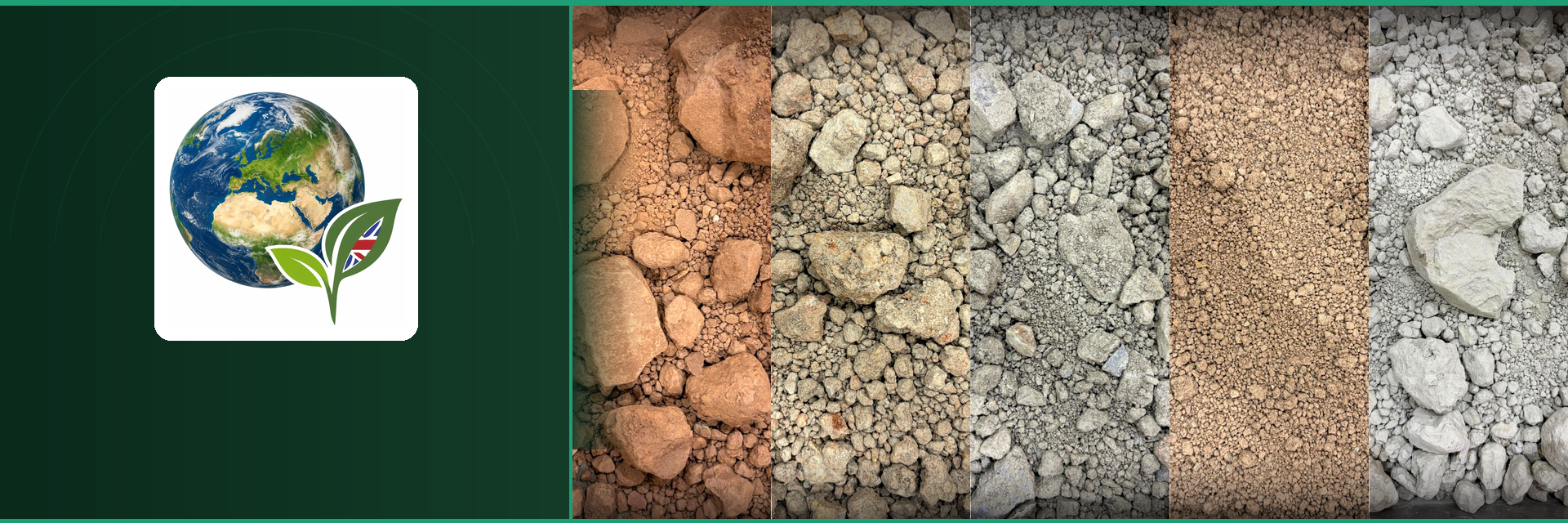
Developing low-carbon Limestone Calcined Clay Cement (LC3) systems from UK clay resources to support durable, resilient and sustainable construction.
Project Overview
EARTHCEM is a Marie Skłodowska-Curie Actions (MSCA) Postdoctoral Fellowship project hosted by Cardiff University. The project investigates Limestone Calcined Clay Cement (LC3), an innovative low-carbon cement technology that can significantly reduce the environmental impact of cement production while maintaining the performance required for modern infrastructure.
Concrete is the most widely used construction material in the world, yet cement production contributes approximately 9% of global carbon dioxide (CO₂) emissions. As countries work towards net-zero targets, the construction sector must develop more sustainable materials that reduce emissions without compromising durability, safety, or performance.
EARTHCEM addresses this challenge by exploring how locally available UK clay resources can be transformed into high-performance cementitious materials for a more sustainable built environment.
Why EARTHCEM Matters
The construction industry faces increasing pressure to reduce carbon emissions while continuing to provide the infrastructure needed for growing populations and resilient communities.
EARTHCEM focuses on:
- Reducing the carbon footprint of cement production.
- Promoting the use of locally available clay resources.
- Advancing low-carbon cement technologies.
- Improving long-term durability and service life.
- Supporting sustainable construction and net-zero ambitions.
Research Focus
EARTHCEM investigates the complete pathway from clay resources to durable low-carbon cement systems:
Clay Resources and Activation
Characterisation of UK clay deposits and optimisation of calcination processes to maximise reactivity.
Cement Performance
Investigation of hydration, strength development, and microstructural evolution in LC3 systems.
Durability and Service Life
Assessment of long-term performance under aggressive environmental exposure conditions.
Sustainability Assessment
Evaluation of environmental benefits and service-life implications of low-carbon cement technologies.
Project at a Glance
| Item | Details |
|---|---|
| Project | EARTHCEM |
| Full Title | A CEMent harnessing EARTH for a sustainable built environment |
| Funding Programme | Horizon Europe Marie Skłodowska-Curie Actions (MSCA) |
| Grant Agreement | 101210513 |
| Duration | 16 January 2026 – 15 January 2028 |
| Host Institution | Cardiff University |
| MSCA Fellow | Dr Deepankar Ashish |
| Academic Supervisor | Dr Riccardo Maddalena |
| Co-supervisor | Dr Diane Gardner |
Funding
EARTHCEM has received funding from the European Union’s Horizon Europe research and innovation programme under the Marie Skłodowska-Curie Actions Postdoctoral Fellowship (Grant Agreement No. 101210513).
Views and opinions expressed are those of the author(s) only and do not necessarily reflect those of the European Union, the European Research Executive Agency (REA), or Cardiff University.
Follow the Project
Follow EARTHCEM through this website for project updates, research developments, publications, conference presentations, and public engagement activities throughout the fellowship.