Menopause Geographies
Menopause, place and identity
Our study suggests that women’s experiences of the menopause are shaped by their local environment. In addition to varying degrees of social support across the different study sites noted earlier, a further example of this can be seen in the high uptake of HRT amongst white professional middle-class women living in affluent areas of Bristol and London, but much lower rates amongst women of colour in more demographically mixed neighbourhoods, as well as white women in Stroud, which has a more alternative/artistic character. Monmouthshire was a bit of a hybrid of the patterns found in the other study sites.
For those participants who had lived outside of the UK, some felt that people in the UK talked about the menopause more than other places they had lived (including India, Scandinavia), or that HRT was viewed more positively (than in Spain and the US) or was much more readily available (as compared to the US). We suggest that how women experience the menopause is bound up with other kinds of local ‘lifestyle’ norms and local social networks, cultural norms as well as prior experiences of structural discrimination.
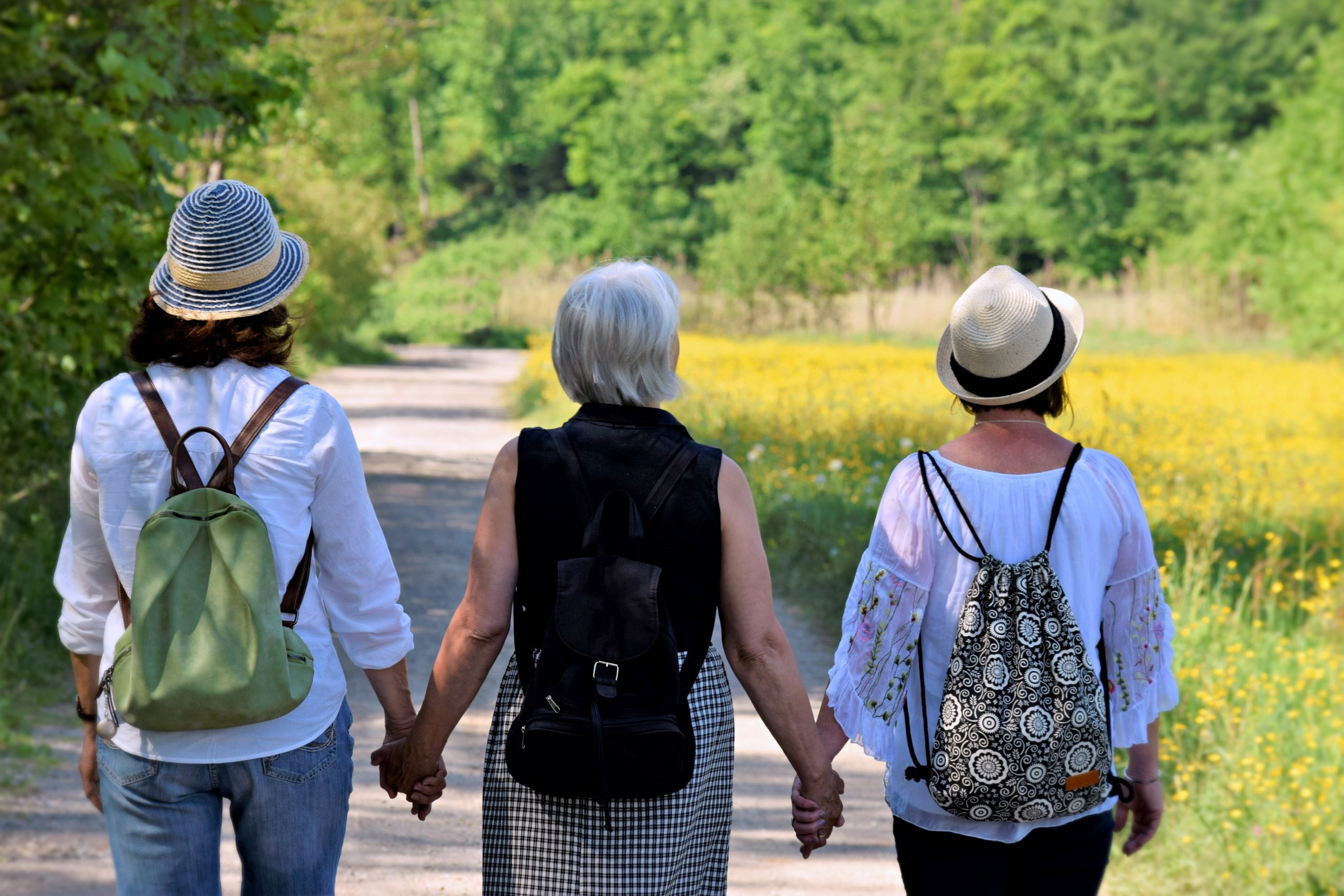
Linking to our earlier point about self-care, some participants also noted valuing green space as a way to be outside and promote wellbeing more than they had in earlier points in life. We also found how people engaged with their local area changing. For some, heavy bleeding during peri-menopause impacted journey-making, while getting lost on familiar routes on the London underground due to brain fog was also raised. For other participants anxiety shaped how they moved around their local area, expressed as fear about bicycling or driving. One participant reported being so affected that she has stopped driving completely, which she described as ‘debilitating’ (this is linked to the concept of ‘catastrophising’ which Dr. Louise Newson reports is common amongst menopausal women).